Par
Louis DUVIVIER
Publié le
21 janv. 2026
7 min
min de lecture
Qu'est-ce qu'un Lead Magnet ?
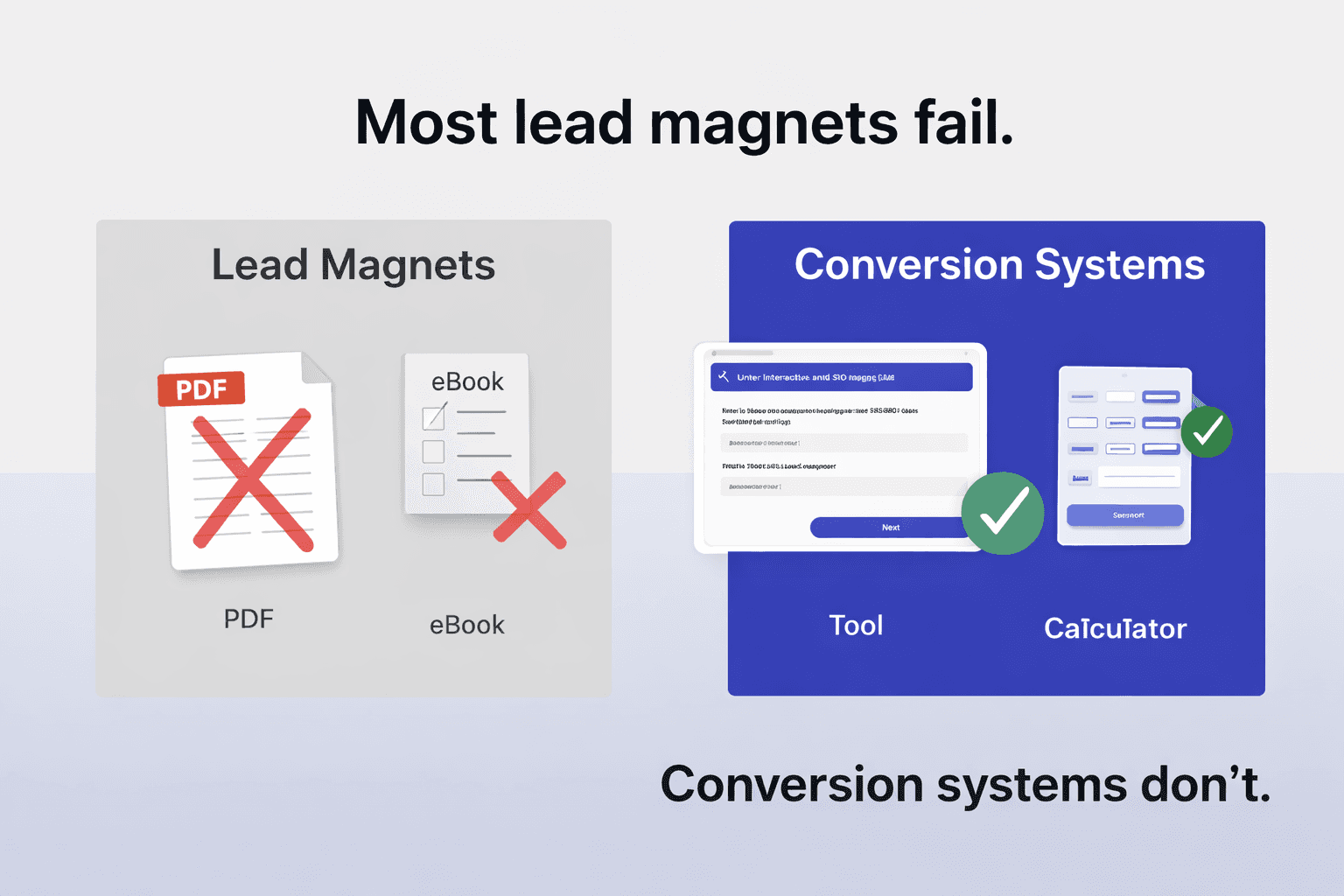
Un lead magnet est un incitatif marketing proposé en échange d'informations de contact, généralement une adresse e-mail, utilisé pour générer des prospects au sommet d'un entonnoir marketing. En pratique, les lead magnets performants ne sont pas seulement des actifs de contenu mais des systèmes de conversion conçus pour offrir une valeur immédiate et mesurable. Contrairement au contenu passif, ils fonctionnent comme des mécanismes actifs au sein de votre entonnoir marketing, où le succès est déterminé par le taux de conversion plutôt que par le nombre de téléchargements.
Pourquoi la plupart des Lead Magnets ne fonctionnent pas
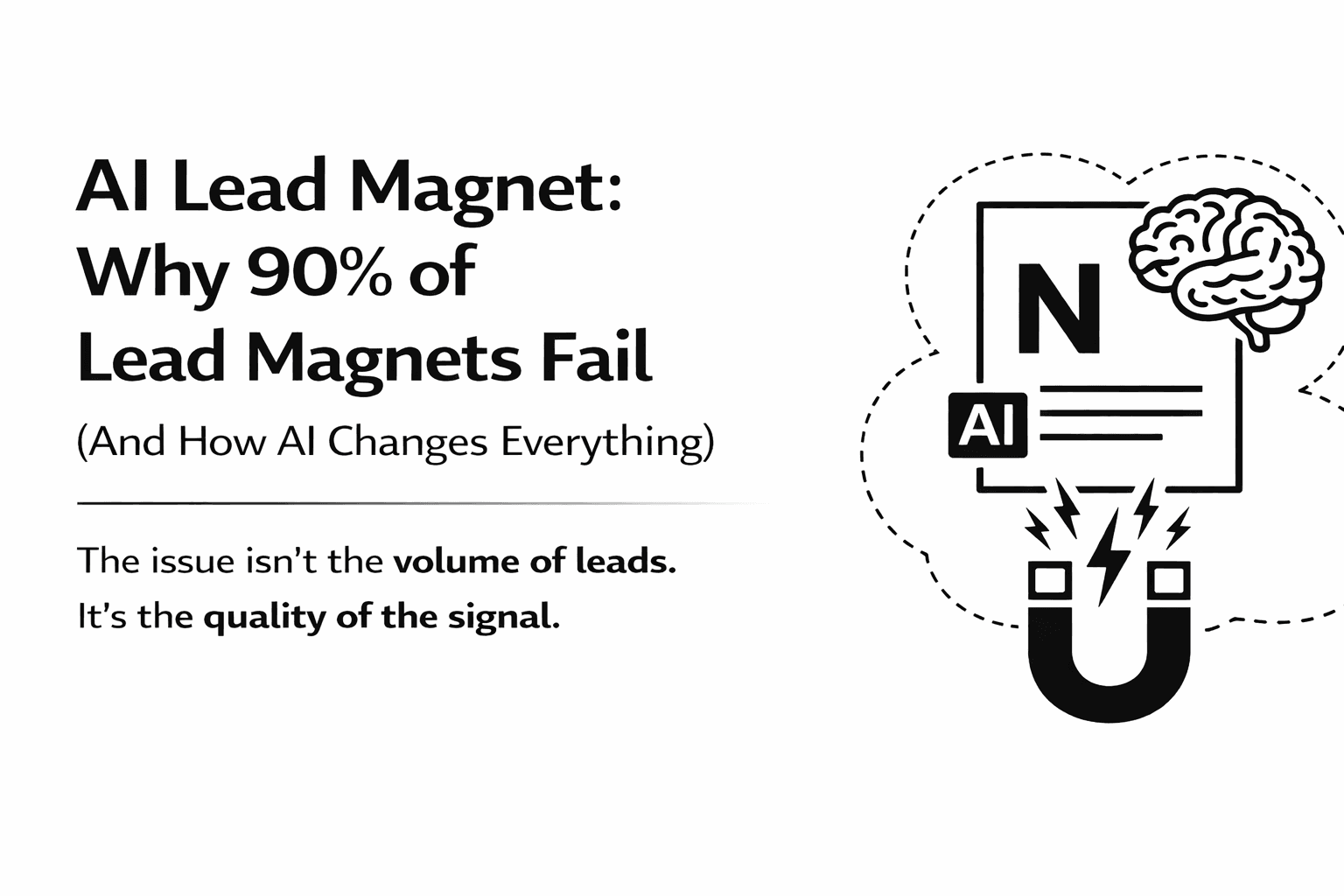
Les normes de l'industrie montrent de façon constante que la plupart des lead magnets convertissent dans des chiffres bas à un chiffre. Le problème n'est pas un manque d'effort. C'est structurel. La plupart des lead magnets sont construits sur des hypothèses d'une époque où le simple fait d'offrir du contenu gratuit suffisait à la différenciation. Aujourd'hui, ce modèle crée trois points d'échec critiques.
Ils dépendent de contenu statique
Les PDF, ebooks et livres blancs nécessitent que les utilisateurs s'engagent avant d'expérimenter la valeur. Cela crée une barrière de confiance : le visiteur doit croire que votre guide de 40 pages résoudra son problème avant de voir des preuves.
Le contenu statique crée également une friction initiale. Téléchargez, ouvrez, lisez, mettez en œuvre. Chaque étape crée des opportunités d'abandon. La conversion se produit au moment de la moindre certitude.
Ils créent une friction inutile
Les lead magnets traditionnels introduisent des étapes entre l'intérêt et la valeur. La confirmation par e-mail, les téléchargements de fichiers et la navigation loin de la page d'atterrissage réduisent tous la conversion. La recherche sur l'optimisation de la conversion montre de manière constante que chaque étape supplémentaire dans un entonnoir réduit considérablement les taux de complétion.
Les formats statiques manquent également de divulgation progressive. Ils ne peuvent pas adapter l'expérience en fonction des entrées des utilisateurs, forçant tout le monde à passer par le même chemin, indépendamment de leur besoin spécifique.
Ils ne sont pas mesurables
Lorsque votre lead magnet est un PDF, vous savez combien de personnes l'ont téléchargé. Vous ne savez pas qui l'a ouvert, quelles sections elles ont lues ou si cela a influencé leur décision d'achat. Cette lacune de mesure rend l'optimisation impossible. Vous ne pouvez pas améliorer ce que vous ne pouvez pas mesurer, et le contenu statique ne fournit aucune donnée comportementale au-delà de la conversion initiale.
Ils ne peuvent pas être itérés
Mettre à jour un PDF signifie un chaos de versionnage. Vous ne pouvez pas tester des titres A/B, réorganiser le contenu en fonction des performances ou ajuster l'expérience en fonction du segment utilisateur. Chaque changement nécessite une republication, une redistribution et la gestion de plusieurs versions. Cette inflexibilité structurelle empêche l'itération rapide qui définit l'optimisation de conversion moderne.
Types de Lead Magnets : Contenu Statique vs Systèmes Interactifs
Les lead magnets existent sur un spectre allant de passif à actif. Comprendre cette distinction clarifie pourquoi certains formats surpassent systématiquement les autres.
Type | Statique | Interactif | Valeur Immédiate | Mesurable | Itérable |
|---|---|---|---|---|---|
Ebook | Oui | Non | Non | Non | Non |
Liste de contrôle | Oui | Non | Limité | Non | Non |
Modèle | Oui | Limité | Limité | Non | Non |
Quiz | Non | Oui | Oui | Oui | Oui |
Calculateur | Non | Oui | Oui | Oui | Oui |
Évaluation | Non | Oui | Oui | Oui | Oui |
Outil Diagnostic | Non | Oui | Oui | Oui | Oui |
Les formats statiques fournissent des informations. Les systèmes interactifs fournissent des résultats. Cette distinction détermine la performance de conversion.
Lorsqu'un visiteur complète un quiz ou un calculateur, il reçoit un résultat spécifique à son entrée : une recommandation personnalisée, un score ou un diagnostic. Cela crée de la valeur avant que l'e-mail ne soit soumis, inversant l'équation de confiance traditionnelle.
Comment créer un Lead Magnet qui convertit réellement
Construire un lead magnet à forte conversion nécessite de repenser la relation entre valeur et friction. Ces principes s'appliquent indépendamment du format, mais ils sont structurellement plus faciles à mettre en œuvre avec des systèmes interactifs.
Commencez par un résultat
Définissez le résultat spécifique que votre lead magnet fournit. Pas "informations sur X" mais "un calcul qui détermine X" ou "un diagnostic qui identifie X." La clarté du résultat stimule la conversion. Les promesses vagues créent l'hésitation.
Un lead magnet intitulé "Le Guide Ultime de la Stratégie de Prix" manque de spécificité des résultats. "Calculez Votre Prix Optimal en 90 Secondes" définit les critères de succès avant que l'utilisateur s'engage.
Votre résultat doit être immédiat, spécifique et suffisamment précieux pour justifier la friction de fournir des informations de contact. Il doit répondre à la question : "Que saurai-je ou que pourrai-je faire que je ne peux pas faire maintenant ?"
Retirer la friction
Chaque étape entre l'atterrissage et la valeur réduit la conversion. Examinez votre processus lead magnet actuel : combien de clics séparent l'arrivée du résultat ? L'utilisateur doit-il télécharger un logiciel, créer un compte ou naviguer hors de la page ? Chacun représente un risque d'abandon.
Les lead magnets à plus forte conversion fournissent de la valeur en ligne. Pas de téléchargements, pas de confirmations, pas de navigation. L'utilisateur interagit, reçoit son résultat, puis échange des informations de contact pour une analyse complète ou un aperçu détaillé.
La valeur précède l'engagement.
Rendez-le interactif
Les lead magnets interactifs changent fondamentalement la proposition de valeur. Au lieu de promettre une utilité future, ils fournissent des résultats immédiats et personnalisés. Cela modifie la transaction psychologique : l'utilisateur n'achète pas une valeur potentielle, il prolonge une expérience qu'il a déjà validée.
Voici un lead magnet interactif réel, construit sans code, illustrant à quoi ressemble un lead magnet orienté conversion en pratique :
Calculateur de ROI pour Outils Marketing →
Ce calculateur démontre la différence structurelle entre les formats statiques et interactifs. Les utilisateurs saisissent leurs métriques, reçoivent un calcul immédiat, et peuvent accéder à des recommandations détaillées en fournissant leur e-mail. L'échange de valeur est transparent et séquentiel : expérience d'abord, engagement ensuite.
Les formats interactifs créent naturellement cette séquence de valeur :
Les calculateurs, évaluations, outils diagnostiques nécessitent une entrée utilisateur
Ils la traitent et génèrent une sortie personnalisée
Cette interaction crée un investissement psychologique
La demande d'e-mail qui suit semble comme une continuation plutôt qu'une barrière
Mesurer la conversion
L'optimisation efficace nécessite des données granulaires. Suivez non seulement les soumissions de formulaires, mais aussi la progression à travers chaque étape : vues de pages, interactions commencées, interactions complétées, e-mails soumis. Cela révèle où les utilisateurs abandonnent et quels éléments motivent la complétion.
Pour les lead magnets interactifs, mesurez des métriques comportementales supplémentaires : temps d'interaction, taux d'achèvement des entrées, durée de vue des résultats. Cela indique la qualité de l'engagement et aide à identifier les points de friction. Testez A/B des éléments individuels pour améliorer systématiquement les performances.
Itérer sans code
L'optimisation traditionnelle des lead magnets nécessite des ressources de développeur pour chaque changement. Cela crée un goulot d'étranglement : les marketers identifient des opportunités, mais la mise en œuvre dépend de la disponibilité de l'ingénierie. Le cycle d'itération s'étend de jours à semaines, ralentissant la vitesse d'amélioration.
Les plateformes sans code dédiées spécifiquement aux systèmes de lead magnets (comme Magnetly) suppriment cette dépendance, permettant aux marketers de tester des hypothèses, d'ajuster la logique et de mettre à jour le contenu sans intervention technique. Cela augmente la fréquence d'itération de mensuelle à hebdomadaire ou quotidienne, améliorant considérablement le taux d'optimisation des performances.
Pourquoi les Outils Surpassent le Contenu en tant que Lead Magnets
En pratique, les lead magnets les plus performants ne sont que rarement des documents. Ce sont des outils conçus pour exécuter un résultat de conversion spécifique. Le passage du contenu aux outils reflète des changements plus larges dans la façon dont les utilisateurs évaluent la valeur. L'attention est rare, la confiance est durement acquise et la valeur promise est sous-estimée. Les outils interactifs répondent mieux à ces contraintes que le contenu statique sur quatre dimensions.
Rapidité vers la valeur
Un calculateur fournit des résultats en quelques secondes. Un ebook nécessite 20 minutes de lecture pour extraire l'équivalent d'un aperçu. La rapidité vers la valeur réduit l'abandon et augmente l'utilité perçue.
Les utilisateurs jugent toute l'expérience par leur première interaction. Lorsque la valeur arrive immédiatement, ils sont plus susceptibles de compléter la conversion.
Cet avantage de vitesse se renforce dans les contextes mobiles, où la lecture de contenu long est particulièrement gênante. Les outils interactifs qui fonctionnent en ligne n'exigent aucun changement de contexte, aucune gestion de fichiers et aucune gratification différée.
Optimisation de la conversion
Les outils interactifs exposent des données comportementales que le contenu statique ne peut pas. Vous pouvez suivre quelles questions provoquent l'hésitation, quels résultats incitent à soumettre un e-mail et quels segments d'utilisateurs se convertissent le mieux. Cette granularité permet une optimisation ciblée.
Les outils soutiennent également la divulgation progressive. Commencez par une question, révélez la suivante en fonction de la réponse et guidez les utilisateurs vers leur résultat spécifique. Cette structure adaptative réduit la charge cognitive et garde l'interaction concentrée.
Le contenu statique doit fonctionner pour tout le monde simultanément. Les outils peuvent personnaliser le chemin pour chaque utilisateur.
Itération
Mettre à jour un outil signifie changer la logique, le contenu ou le flux. Tout cela est réalisable sans republication ni redistribution. Les changements prennent effet immédiatement pour tous les nouveaux utilisateurs. Cela permet une amélioration continue : testez un nouveau format de question lundi, analysez les résultats mercredi, mettez en œuvre le gagnant jeudi.
La vitesse d'itération est directement corrélée à l'amélioration de la conversion. Les équipes qui testent chaque semaine surpassent celles qui testent mensuellement, non pas parce que les tests individuels sont meilleurs, mais parce qu'elles accumulent plus d'apprentissages. Les outils sans code rendent cette vitesse accessible aux équipes sans ressources d'ingénierie.
Scalabilité
Un outil bien conçu sert indéfiniment sans coût incrémental. Il n'y a pas d'inventaire à gérer, aucun mécanisme de livraison à maintenir et aucune complexité de contrôle de version. Une fois construit, il fonctionne comme un actif de conversion qui cumule de la valeur dans le temps.
Les outils se développent également à travers différentes utilisations. Un calculateur de prix construit pour une ligne de produits peut être adapté pour d'autres. Un cadre d'évaluation appliqué à un segment de clients peut être modifié pour différentes personnes. Cette réutilisation augmente le ROI sur l'investissement initial de construction.
Exemples de Lead Magnets Construits Sans Code
Les lead magnets interactifs fonctionnent à travers les industries et les cas d'utilisation. Ces exemples illustrent l'approche axée sur le résultat en pratique.
Allocateur de Budget Marketing : Les utilisateurs saisissent leur budget total et leurs priorités commerciales. L'outil recommande l'allocation des pourcentages à travers les canaux en fonction de leur stade de croissance et de leurs objectifs. Résultat : un plan de dépenses spécifique plutôt qu'un simple conseil en budgétisation. La conversion se produit après que les utilisateurs voient leur répartition personnalisée et souhaitent la justification détaillée.
Évaluation de la Dette Technique : Les équipes de développement répondent à des questions sur leur base de code, leur fréquence de déploiement et leur réponse aux incidents. L'outil calcule un score de dette technique et identifie les domaines à plus fort impact pour l'amélioration. Résultat : une feuille de route priorisée plutôt qu'un guide générique des meilleures pratiques. La demande d'e-mail vient après le score, offrant des recommandations détaillées.
Calculateur de ROI du Contenu : Les marketers saisissent leurs coûts de production de contenu, leur trafic et leurs taux de conversion. L'outil calcule le coût par lead et le compare aux normes de l'industrie. Résultat : clarté immédiate sur l'efficacité du contenu plutôt que des stratégies théoriques. Les utilisateurs fournissent leur e-mail pour recevoir des suggestions d'optimisation spécifiques au segment.
Chaque exemple suit le même schéma : la valeur immédiate et personnalisée précède la demande d'e-mail. Les utilisateurs expérimentent l'utilité avant de s'engager, inversant l'équation de confiance traditionnelle.
Construisez un Lead Magnet Sans Code
La distinction entre contenu et systèmes de conversion détermine la performance des lead magnets. Les formats statiques expliquent. Les systèmes interactifs exécutent. Les lead magnets à forte conversion fournissent des résultats immédiats et personnalisés qui valident leur valeur avant de demander des informations de contact.
Cet avantage structurel explique pourquoi les calculateurs et les évaluations surpassent systématiquement les ebooks et les livres blancs. Ils réduisent la friction, permettent la mesure et soutiennent l'itération rapide : les trois exigences pour l'optimisation de conversion moderne.
Les outils sans code ont rendu cette approche accessible au-delà des équipes de développement. Des plateformes comme Magnetly se concentrent spécifiquement sur la création de lead magnets, fournissant la logique, les formulaires et l'analyse nécessaires pour construire et optimiser des systèmes de conversion interactifs. La question n'est pas de savoir s'il faut utiliser des lead magnets interactifs. Les données le rendent clair. C'est à quelle vitesse vous pouvez les tester dans votre propre entonnoir.
Les lead magnets qui gagneront en 2026 ne seront pas ceux avec le plus de pages. Ce seront ceux qui livrent de la valeur le plus rapidement, mesurent tout et améliorent continuellement.
Cela n'est pas du contenu. C'est un système de conversion.